

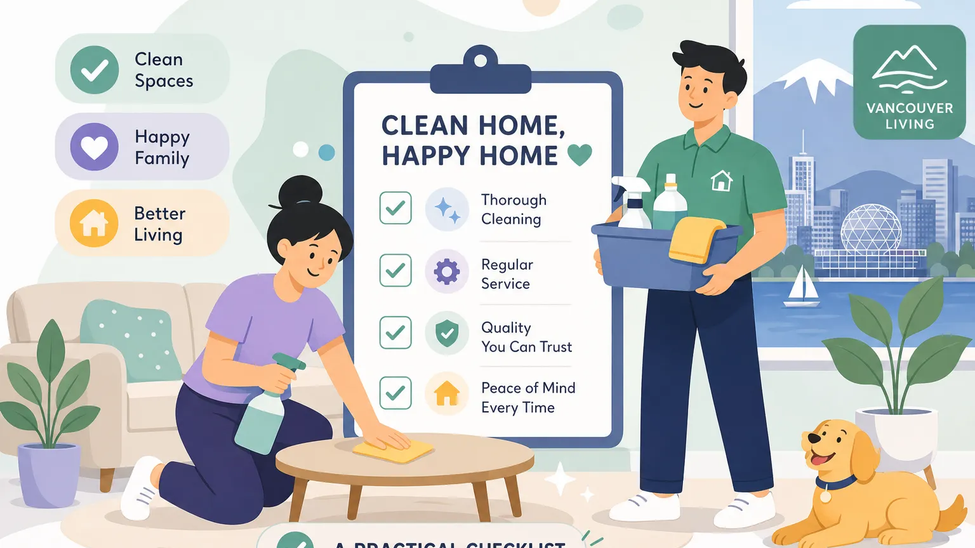
What Cleaning and Service Actually Means for Vancouver Homeowners: A Practical Checklist
Cleaning and service options for Metro Vancouver homeowners and businesses generally fall into five categories: regular maintenance cleaning, deep cleaning, move-in/move-out cleaning, Airbnb turnover cleaning, and office cleaning. Choosing the right one matters more than most people realize until they’ve booked the wrong thing. Service type strongly affects task scope, cost, and whether cleaning meets landlord or guest expectations, the sections below cover each point in detail. This guide helps you match the service to your need, use the right checklists to confirm scope, vet your provider properly, and book with confidence.
Key takeaways
– Service type determines scope:Choosing the wrong category means overpaying for tasks you don’t need or underdelivering on what a landlord or guest expects.
– Get the checklist in writing:Always confirm the written task list before booking, especially for appliance interiors, cabinet interiors, and windows.
– Vetting protects your home:Request a current liability insurance certificate, WorkSafeBC confirmation, bonding details, and a written staff screening policy before anyone enters.
– Local variables add complexity:Strata rules, seasonal moisture, and Airbnb turnover timing create a layer that generic cleaning advice skips entirely.
What types of cleaning and service do Vancouver homeowners and businesses actually need?
Not every cleaning job is the same, and the distinction matters more than most people expect before they’ve booked the wrong thing. A standard recurring clean leaves appliance interiors and baseboards untouched. A move-out clean digs into every cabinet and closet corner because a landlord will. Matching the service category to the actual situation protects you from missed tasks, failed inspections, and unexpected costs.
Regular maintenance vs. deep cleaning: where each one fits
Regular cleaning is scheduled upkeep, typically weekly or biweekly, covering visible surfaces, high-traffic areas, and the tasks that keep a home presentable between deeper resets. Deep cleaning is a one-time or periodic service that addresses what regular visits skip: baseboards, grout, range hoods, mineral scale, and buildup in less-accessible spots. Many providers recommend starting with a deep clean before moving to a recurring schedule, because it establishes a true baseline rather than maintaining a partially neglected starting point.
Move-in/move-out cleaning and Airbnb turnovers
Move-out cleaning is performed in an empty property and is built around landlord inspection standards: inside cabinets, appliance interiors, closet corners, and floor edges all get attention. Airbnb turnover cleaning operates on a tighter timeline and prioritizes guest-ready presentation, fresh linens, restocked supplies, and a standardized final walkthrough between stays. These two jobs look similar on the surface, but their urgency and scope expectations differ enough that you should confirm which standard your provider is working to before you book.
Office and commercial cleaning in Metro Vancouver
Commercial cleaning is scheduled around business hours, uses supply standards suited to shared workspaces, and is often governed by strata or building management requirements. Metro Vancouver office clients typically need flexibility in scheduling and consistent staff assignment for security and access-control reasons. A provider without experience navigating those constraints can create friction from the first visit, for example, a missed elevator booking can force a rescheduled service and throw off the entire week’s access plan.
What does each type of cleaning and service actually include? A practical checklist
The table below compares what’s standard across the three main residential service types. Treat it as a reference point for any quote conversation, not as a guarantee of what every provider delivers without being asked.
| Service type | Usually included | Common exclusions |
| Standard / regular cleaning | Wipe counters and appliance exteriors; clean stovetop and sink; scrub toilets, tubs, and bathroom surfaces; dust accessible furniture; vacuum carpets; mop hard floors; empty bins | Inside oven or fridge; baseboards; interior windows; cabinet interiors; laundry; dishes |
| Deep cleaning | Everything above, plus hand-wiped baseboards, door frames, switches, and vent covers; degreased range hood and stovetop grates; grout and mineral scale treatment; window sills and tracks; reachable areas under furniture | Interior appliances (unless added); full interior window washing; wall washing |
| Move-out / move-in cleaning | Full deep-clean scope in an empty home; inside cabinets, drawers, and closets; appliance interiors (oven, fridge, microwave); floor edges and corners; detailed window tracks | Exterior windows; carpet shampooing; wall washing; moving appliances out from walls |
Standard cleaning checklist
In a standard clean, expect counters and appliance exteriors to be wiped, the stovetop and sink scrubbed, toilets and bathroom surfaces disinfected, accessible furniture dusted, carpets vacuumed, hard floors mopped, and bins emptied. What’s almost always excluded: the inside of the oven or refrigerator, baseboards, interior windows, cabinet interiors, and any laundry or dishes. Ask for the written task list before booking. Mismatched expectations are the most common source of complaints, and a reliable provider won’t hesitate to put the checklist in writing.
Deep cleaning checklist
Deep cleaning builds on the standard list and adds the detail work: hand-wiping baseboards, door frames, light switches, outlets, and vent covers; degreasing stovetop grates and the range hood; treating grout and mineral scale in bathrooms; cleaning window sills and tracks; and addressing reachable areas under furniture. Because deep cleaning is typically done in an occupied home, making beds and tidying small items are usually included, which differentiates it from a move-out clean where the property is empty. A deep clean makes sense for first appointments, post-renovation situations, or homes that haven’t had detailed attention in a few months. If you’ve recently completed a renovation and are searching for cleaning services near me or a cleaning company near me, this is typically the right starting point before committing to a recurring schedule.
Move-out and Airbnb turnover checklist
Move-out scope covers everything in a deep clean, with the added range that comes from working in an empty space: inside cabinets and drawers, appliance interiors (oven, fridge, microwave), closet interiors, floor edges, and detailed window tracks. Airbnb turnover cleaning adds a presentation layer on top: linen changes, restocked amenities, and a final walkthrough against a guest-ready checklist. Some providers offer a re-clean if a landlord or guest raises a concern within 24 to 48 hours; confirm whether that’s part of your agreement before you sign anything.
What Vancouver homeowners should know before scheduling a cleaning and service visit
Metro Vancouver has specific local conditions that affect scheduling, product selection, and building access. These variables show up in strata bylaws, the city’s high-rainfall climate, and the compressed timelines of short-term rental turnovers. Generic cleaning advice doesn’t account for them, and skipping them creates avoidable problems.
Seasonal concerns and moisture issues specific to Vancouver properties
Vancouver’s high-rainfall climate creates ongoing risks around mold, mildew, and condensation, particularly in bathrooms, window frames, and basement suites. These problems intensify from fall through spring, when persistent rain and indoor moisture combine in spaces without adequate ventilation. Seasonal deep cleans, especially in fall before heating season, address the buildup that accumulates in damp conditions and can flag early moisture issues that wouldn’t be visible during a quick standard visit. That’s a practical benefit well beyond surface cleanliness.
Strata rules that affect cleaner access and approved products
Many Metro Vancouver condos and townhomes have strata bylaws governing elevator booking for service providers, approved entry hours, and restrictions on chemical products in shared spaces. Check your strata’s current bylaws before scheduling, and confirm with your cleaning provider that they understand strata access protocols. Sparkle Cleaning Services uses eco-friendly, non-toxic products.
Short-term rental turnover expectations in Metro Vancouver
Airbnb hosts in Metro Vancouver face tighter turnaround windows than standard residential cleaning, often with same-day checkout and check-in leaving four hours or less to complete the full turnover. That window must also absorb building access, elevator delays, on-site laundry, restocking, and a final inspection, which leaves less actual cleaning time than hosts often expect. Before committing to a provider for ongoing turnover service, confirm they can handle flexible same-day scheduling and have a clear linen management protocol established in advance. If you’re looking for a maid service that specializes in short-term rental turnovers, ask specifically about same-day availability and linen logistics before booking.
How to vet a professional cleaning company before letting them in your home
Canada has no national licensing body for cleaning companies, which puts the vetting responsibility entirely on the homeowner. A website that claims to be “insured and bonded” is not the same as a provider that can hand you a current certificate. Vet on three fronts: documentation, platform reviews, and a direct conversation before booking.
The documents to request before booking
Request a current commercial general liability insurance certificate showing the policy dates and coverage limit, WorkSafeBC coverage confirmation (this reduces your exposure if a worker is injured on your property), and bonding or employee-dishonesty coverage details that specifically cover theft rather than just property damage. Also ask for a written staff screening policy confirming that all workers entering your home have passed criminal-record checks, including subcontractors. Sparkle Cleaning Services advertises verified staff, which is worth confirming directly with the company alongside your documentation request.
How to read reviews and use Canadian vetting platforms
For Canadian cleaning companies, HomeStars Verified offers the most documented screening process, covering criminal background, licensing, and business registration checks. Google Business Profile provides volume-based reputation signals that reveal patterns over time. Cross-reference at least two platforms and look specifically at how a company responds to negative reviews; that reveals more about reliability than a high average score. A documented satisfaction guarantee backed by a re-clean policy is a concrete quality signal worth confirming in writing before booking.
Questions to ask a local cleaning provider before you sign
Five questions cut through vague marketing quickly. What is your staff screening process, and does it cover all workers including subcontractors? Can you provide a current insurance certificate? What is your cancellation policy, and what counts as a late cancellation? What happens if I’m not satisfied with the clean? Is the task checklist for my specific service type available in writing? A reputable provider answers all five without hesitation. Vague answers about subcontractors or reluctance to share documentation are meaningful warning signs, not minor inconveniences.
How much does professional cleaning cost in Metro Vancouver, and how do you get a fair quote?
Price is a function of service type, home size, and provider quality. Evaluating quotes intelligently means understanding what drives the number up or down, not just comparing totals.
Price ranges by service type in Metro Vancouver
According to biller.ca and anyclean.ca, standard cleaning for a three-bedroom Metro Vancouver home typically runs $200 to $320, with hourly rates of $40 to $55 per cleaner. Post-construction cleaning, which addresses dust, debris, and residue left after renovation work, typically falls at the higher end of or above the deep-clean range given the additional scope involved. Vancouver consistently sits at the upper end of national ranges; cities like Calgary or Halifax typically come in lower. Flat-rate quotes are generally more predictable than hourly billing for first-time deep cleans or move-outs, where scope can expand once the work is underway.
What drives price differences and how to evaluate competing quotes
Quote differences usually come down to bedroom and bathroom count, home condition at service time, whether supplies are included, provider distance, and add-ons like appliance interiors or window washing. Get at least two or three quotes for the same written scope, not just a verbal description. Unusually low quotes that omit supply costs or don’t include insurance coverage can indicate savings on worker screening or product quality rather than genuine efficiency, ask exactly what is and isn’t included before comparing totals. Contact providers for an estimate; having a scoped quote in hand makes every other comparison more concrete.
Putting it all together
When selecting cleaning and service options in Metro Vancouver, the decisions that protect you most are also the most straightforward: confirm the service type matches your actual situation, get the task checklist in writing, and verify the documentation package before anyone enters your home. Understanding what the price actually covers heads off the most common frustrations, missed tasks, unexpected fees, and inconsistent quality from visit to visit. Strata rules, seasonal moisture, and Airbnb turnover timing add a local layer that applies regardless of which provider you choose.
Use the checklists in this article as a baseline for any quote conversation, confirm the documentation package before anyone enters your home, and book your estimate before the next season’s cleaning demands stack up.
Frequently Asked Questions
How often should we schedule a deep clean versus a regular maintenance clean?
We recommend starting with a deep clean and then moving to a regular maintenance schedule; many providers advise this because a deep clean establishes a true baseline rather than maintaining a partially neglected starting point. Seasonal deep cleans, especially in fall before the heating season, are practical in Vancouver to address moisture-related buildup and to catch early mold or mildew issues. Regular maintenance is typically weekly or biweekly to keep a home presentable between deeper resets.
What should we do if a landlord or guest raises a concern after a clean?
We advise confirming whether the provider offers a re-clean policy and the time window for it, since some providers offer a re-clean within 24 to 48 hours. Make sure that any satisfaction guarantee and the re-clean terms are in writing before you book so you know what to expect if a landlord or guest is unhappy. Vague answers about follow-up or reluctance to document the policy are meaningful warning signs.
What should we confirm about Airbnb turnover logistics before hiring a provider?
We recommend confirming that the provider can handle flexible same-day scheduling and that they have a clear linen management protocol, because Metro Vancouver turnovers often leave four hours or less for cleaning between guests. Also confirm how the provider manages building access, elevator delays, and on-site laundry so the tight turnaround can absorb those variables. Ask for their specific linen and restocking procedures in writing before you commit to ongoing turnover service.